
Free construction calculators for quick, accurate estimates, measurements, and project planning
Paint Calculator
Instantly estimate the gallons of paint and total cost for any room or project.
Wall Dimensions
Subtract Doors & Windows (Optional)
0
0
Assumes standard door (21 sq ft) and window (15 sq ft).
Fine-Tune Your Estimate (Optional)
Paint Properties
sq ft
Your Estimate
Paint Required
0.00 UnitsEstimated Cost
$0.00How to Calculate The Right Amount of Paint
Get precise paint estimates for your project in a few simple steps.
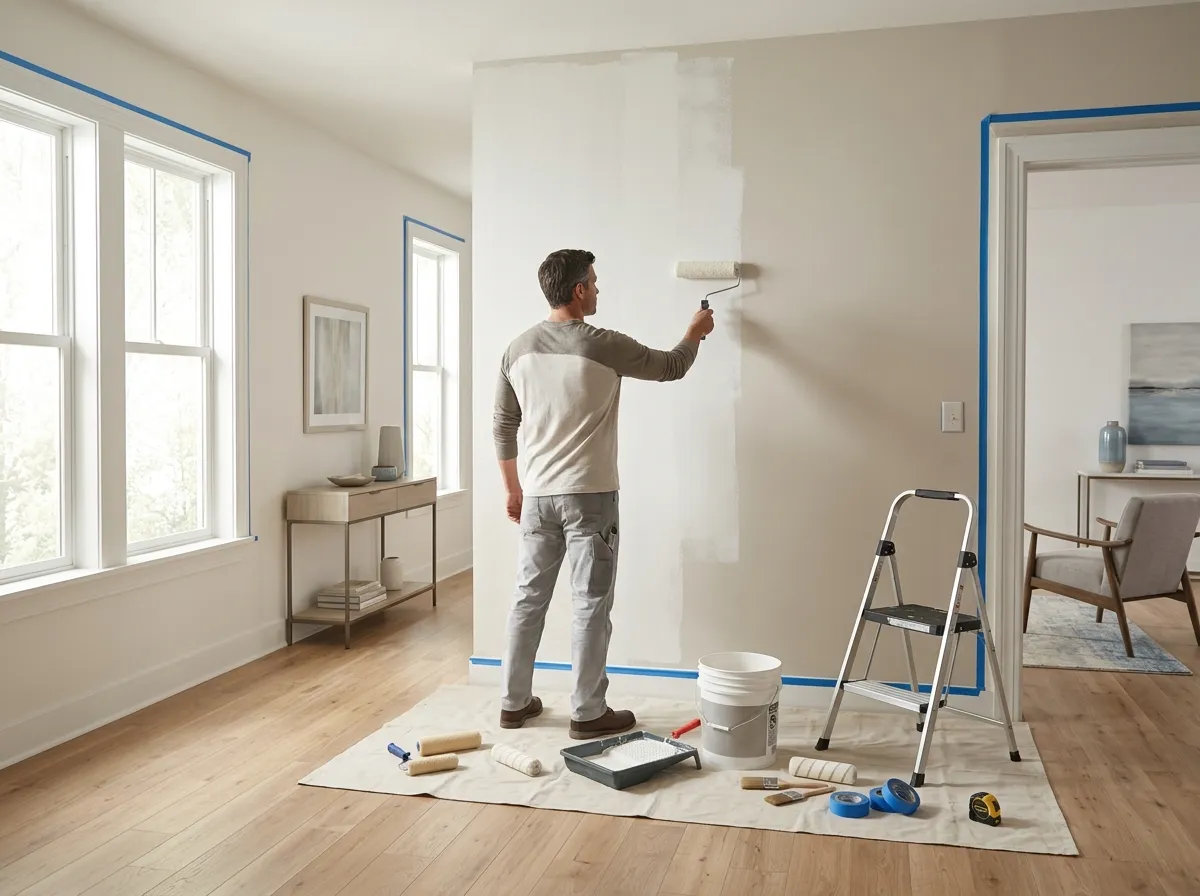
Measure Your Walls
Measure the length of each wall you plan to paint and add them together. Then, measure the height of the room from floor to ceiling. Enter these into the calculator.
Subtract Doors & Windows
For better accuracy, count the number of standard doors and windows in the room. Our calculator subtracts their area automatically so you don't buy paint for surfaces you won't cover.
Check Paint Coverage
Look on the side of your paint can for the "coverage" or "spread rate," listed in sq ft per gallon. The average is 350 sq ft, but it can vary. Enter this number for the most accurate result.
Choose Number of Coats
Most projects require two coats for a smooth, professional finish, especially when changing colors. If you're using a high-quality primer or painting a similar shade, you might only need one.
Get Instant Gallons
The calculator instantly shows the total gallons of paint you need for your project. No more complex math, just a clear, simple answer.
Plan and Purchase
With your precise calculation, you can now confidently buy the right amount of paint. Always add 10-15% extra for touch-ups, mistakes, and future scuffs!
Visual Guide to Paint Calculation
Understanding the relationship between area, coverage, and coats is key to an accurate paint estimate.
The Core Paint Formula Explained
Calculating Total Square Footage
The first step is to determine the total paintable area. Our calculator does this by multiplying your total wall length by your wall height, and then subtracting the area of any doors and windows you've added:
(Wall Length × Wall Height) - Door & Window Area
Factoring in Paint Coverage
Next, we account for how much area one gallon of your specific paint can cover (its "spread rate"). We divide your total area by this number to see how many gallons are needed for a single coat:
Total Area / Coverage Per Gallon
Accounting for Multiple Coats
Finally, since most projects need at least two coats for a professional finish, the calculator multiplies the gallons needed for one coat by the number of coats you plan to apply. This gives you the final, accurate amount of paint for your project:
Gallons Per Coat × Number of Coats
Project Tip
Always buy 10-15% more paint than calculated. This "waste factor" covers paint absorbed by rollers, cutting in edges, drips, and leaves you with extra for future touch-ups.
Painting Essentials for a Perfect Finish
Beyond the calculation, choosing the right products and tools is key to a beautiful, lasting finish.
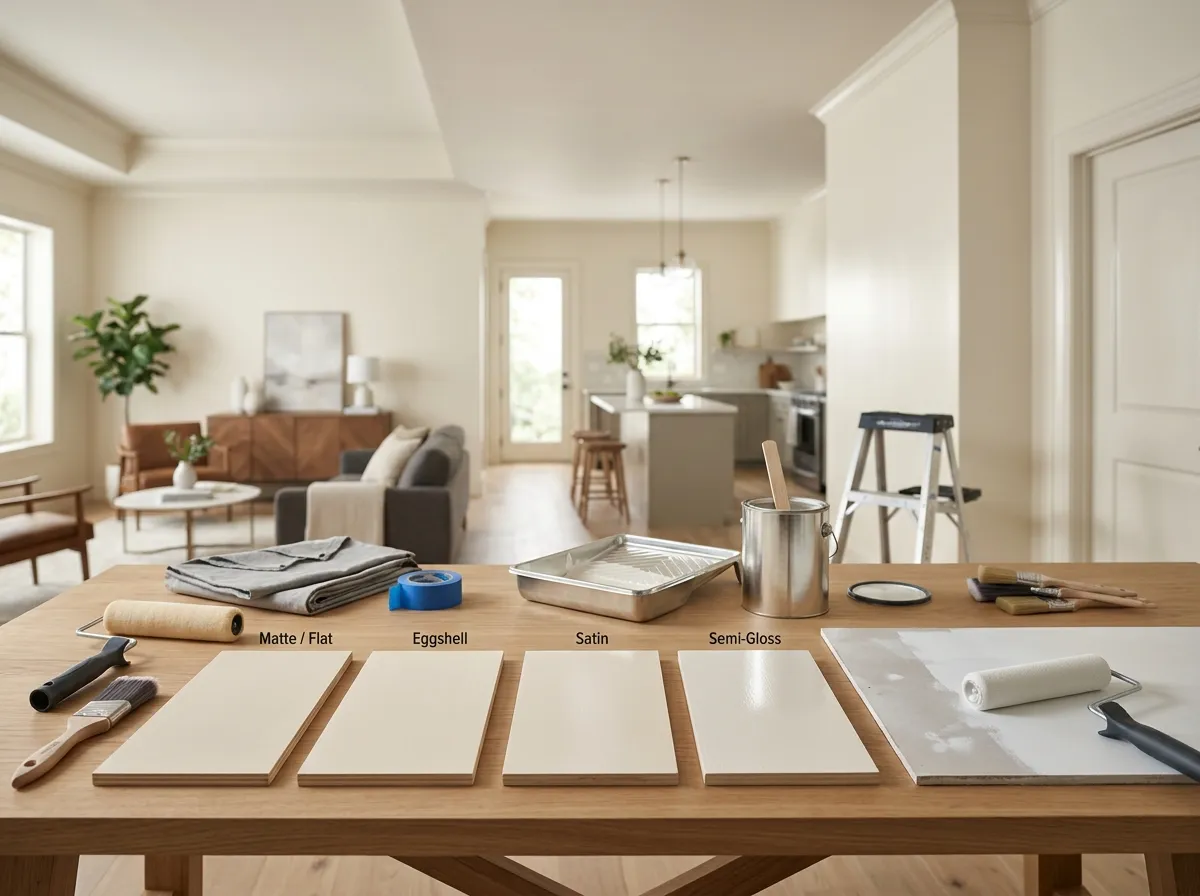
Understanding Paint Sheens
Matte / Flat
Hides imperfections well. Best for low-traffic areas like ceilings and adult bedrooms. Least durable and hardest to clean.
Eggshell
A slight sheen, more durable than flat. A popular choice for living rooms and dining rooms. Easier to clean.
Satin
Silky, pearl-like finish. Very durable and scrubbable. Ideal for high-traffic areas, kitchens, bathrooms, and kids' rooms.
Semi-Gloss
Sleek and radiant. Highly durable and moisture-resistant. Perfect for trim, doors, cabinets, and bathrooms.
Primer: Your Project's Foundation
A primer isn't always necessary, but it's a game-changer in these situations:
- New Drywall: Raw drywall is very porous and will soak up paint. A primer seals it so your topcoat looks even.
- Drastic Color Change: Painting light over dark (or vice versa)? A tinted primer will help you get true color in fewer coats.
- Glossy Surfaces: Paint won't stick well to glossy paint. A bonding primer creates a surface the new paint can grip.
Essential Tools for a Flawless Finish
- Quality Rollers & BrushesA good roller cover and angled brush make a huge difference.
- Painter's TapeFor crisp, clean lines along trim, ceilings, and floors.
- Drop ClothsProtect your floors and furniture from drips and splatters.
- Paint Tray & LinersMakes loading your roller easy and cleanup a breeze.
Pro Tips for an Accurate Paint Estimate
Avoid common pitfalls and ensure your project is a success with these expert tips.
| Tip / Common Mistake | Why It Matters & How to Do It Right |
|---|---|
| Adding a Waste Factor | The calculator gives a precise number, but real-world painting isn't perfect. Always add 10-15% to your final amount. This covers paint lost in the tray, on brushes, and gives you a small can for future scuffs. |
| Considering Surface Texture | Rough, textured surfaces like popcorn ceilings or raw plaster have more surface area and will absorb more paint. If your walls aren't smooth, plan on needing up to 25% more paint than a flat wall. |
| Drastic Color Changes | Painting a light color over a dark one (or vice versa) often requires more paint. A good quality, tinted primer can dramatically reduce the number of top coats needed, saving you time and money. |
| Ignoring Product Specs | Not all paints are created equal. A cheap paint might only cover 250 sq ft per gallon, while a premium one could cover 400. Always use the coverage rate printed on your specific can for the best estimate. |
Frequently Asked Questions (FAQ)
For a standard 12x12 foot room with an 8-foot ceiling, you have a total wall length of 48 feet (12+12+12+12). This gives you a paintable area of 384 sq ft (48 ft × 8 ft). With a typical coverage of 350 sq ft per gallon, you would need just over 1 gallon for one coat, meaning you should buy 2 gallons to apply two coats properly.
While primer is applied like paint, it serves a different purpose: it seals the surface and provides a uniform base for your top coat. You should not count your primer layer in the "Number of Coats" field. Calculate your primer needs separately (it often has similar coverage to paint), and then calculate for 1-2 top coats of your actual paint color.
On average, one gallon of interior latex paint will cover about 350-400 square feet of smooth, previously painted surface. However, this can vary. Porous surfaces like new drywall might only get 250 sq ft of coverage, while some high-end "paint and primer in one" products may cover up to 450 sq ft. Always check the can!
You can use this calculator for ceilings too! Just measure the length and width of the ceiling and enter them in the calculator (or calculate the area and enter it directly). For trim, the calculation is different. A good rule of thumb is that for every 6 square feet of wall area, you will have about 1 linear foot of trim. Most trim projects require less than one quart of paint.
If you don't subtract doors and windows, your total area will be higher, and the calculator will suggest you buy more paint than you actually need. While it's always good to have extra, this can be significant. The area of one door and two windows is over 50 sq ft. Forgetting to subtract them is like adding an extra 6-foot wall to your room, which could be the difference between buying one gallon or two.
To cover 1000 square feet, you will typically need about 2.5 to 3 gallons for a single coat (assuming 350-400 sq ft per gallon). For the recommended two coats, you should plan on buying 5 to 6 gallons of paint. Our calculator can give you a more precise number based on your specific paint's coverage rate.
Almost always, yes. A 5-gallon bucket of paint is typically priced significantly lower per gallon than five individual 1-gallon cans. If your project requires 3.5 gallons or more, buying the 5-gallon bucket is the most cost-effective choice. You'll save money and have plenty of extra for future touch-ups.
What Our Users Say
Sarah Lee
Homeowner
"I was clueless about how much paint to buy for my living room. This calculator was a lifesaver! It was spot on and I had just enough left for touch-ups. No more half-empty cans in the garage."
Tom Wilson
DIY YouTuber
"I recommend this tool to all my subscribers. It's the most accurate and easy-to-use paint calculator out there. The ability to subtract doors and windows makes it truly professional."
Brenda Carter
Professional Painter
"I use this on my tablet for every job quote. It's fast, professional, and helps me create accurate bids for my clients. The share feature is great for sending estimates."
David Chen
Real Estate Agent
"I advise my clients on simple fixes to improve home value. A fresh coat of paint is #1. This tool helps them budget for the project perfectly. It's a fantastic resource."
Maria Garcia
Interior Designer
"This tool is essential for creating accurate budgets for my clients. It helps us plan projects without overspending on materials. Simple, fast, and always reliable. A must-have."
Alex Johnson
New Homeowner
"As a first-time homeowner, I was so nervous about painting. This calculator took away all the guesswork. I followed the estimate and it was perfect for painting my new office. So grateful for this tool!"
Kenji Tanaka
Property Manager
"Managing multiple rental units means I'm always painting. This calculator streamlines my supply orders and helps me keep costs down. I can calculate needs for three apartments in minutes."
Chloe Davis
College Student
"Needed to paint my dorm room on a tight budget. This calculator helped me figure out I only needed one gallon instead of two, which saved me real money. Super easy to use!"
Mike Roberts
Weekend Warrior
"Used this to estimate the stain needed for my back deck. I just put in the deck's square footage for length and '1' for height, and it gave me a great starting point. Very versatile!"