
Free construction calculators for quick, accurate estimates, measurements, and project planning
Common Construction Mistakes: 10 Costly Errors to Avoid
A measurement error caught before materials are ordered costs nothing to fix. The same error discovered after the concrete has cured, the walls are framed, or another trade has already started work can cost thousands of dollars and days of delay. That’s the real problem with common construction mistakes: they rarely stay small.
Most mistakes in construction don’t come from one dramatic failure. They build up from a handful of ordinary decisions: an unclear scope, a measurement that wasn’t double-checked, a material quantity that was estimated too quickly, a change that was made without checking the budget first. Site conditions, communication gaps, and rushed schedules all add their own pressure on top.
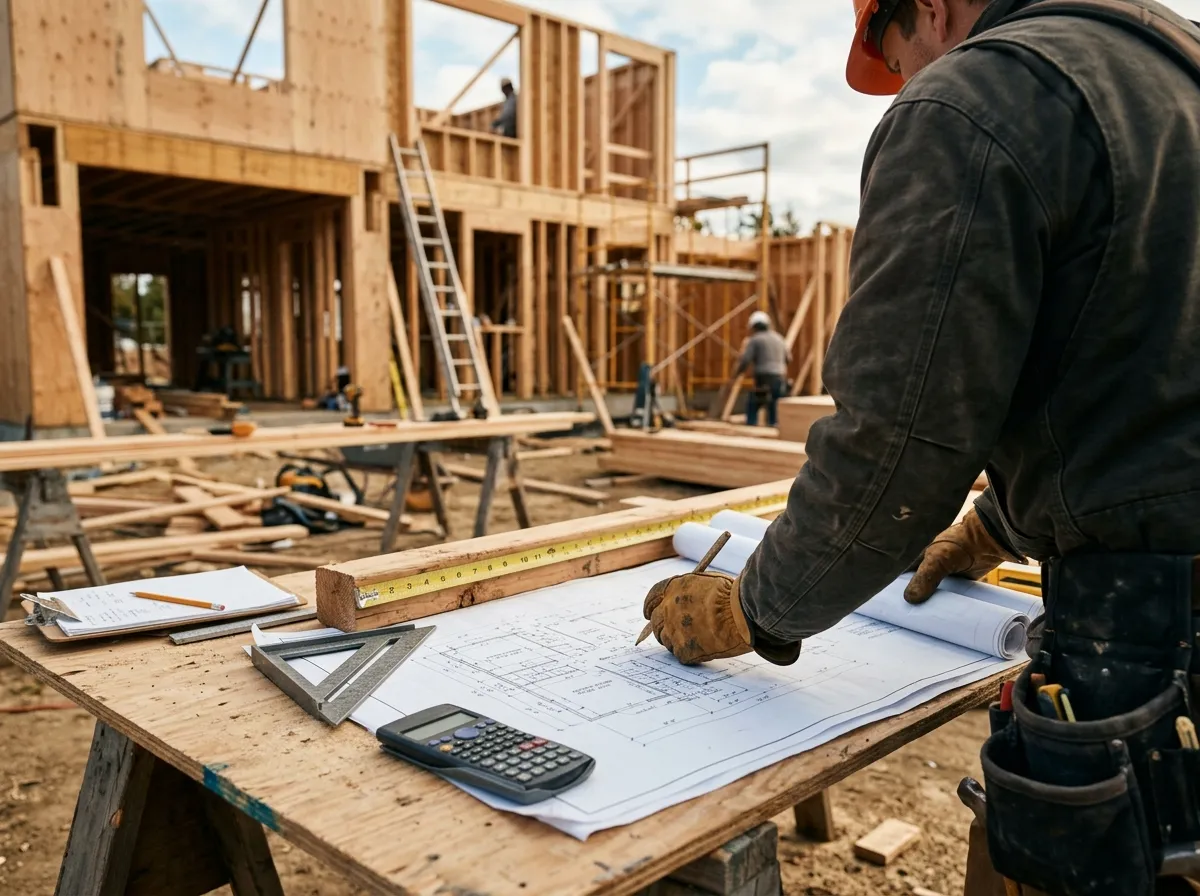
Below are the mistakes that show up again and again on residential and commercial jobs, why they happen, and what actually prevents them. Contractors managing several trades and homeowners overseeing their first build run into the same problem: catch it while it’s still cheap to fix, or pay for it later.
Why Common Construction Mistakes Happen
Most construction errors trace back to a small set of root causes: a handful of bad construction practices that repeat across very different types of projects rather than random, one-off mistakes. Recognizing them is the first step toward avoiding them.
- Unclear project scope: work starts before everyone agrees on exactly what’s being built
- Inaccurate measurements: dimensions taken quickly or never rechecked against the drawings
- Poor planning: sequencing, deliveries, or trade scheduling worked out on the fly
- Inadequate communication: information that doesn’t reach every trade or supplier involved
- Incorrect material quantities: takeoffs based on rough estimates rather than confirmed measurements
- Outdated information: working from an earlier version of drawings or specifications
- Rushed work: shortcuts taken to meet a schedule that was too tight from the start
- Lack of quality checks: work covered or built over before it’s confirmed to be correct
- Budget pressure: cheaper materials or reduced scope chosen without checking the actual trade-offs
- Changes during construction: scope adjustments made without updating cost or schedule
Several of these issues often show up on the same project at once. A tight budget leads to rushed planning, which leads to skipped measurements, which leads to a costly correction later. Breaking that chain usually comes down to slowing down at exactly the points listed above.
10 Common Construction Mistakes to Avoid
The mistakes below account for a large share of the rework, delays, and budget overruns seen on construction projects of every size. What starts as a small construction oops in the first week can turn into a five-figure correction later if nobody catches it in time. Each one below includes what typically causes it and what actually prevents it.
1. Starting Without a Clear Project Plan
Work sometimes begins before the scope, drawings, sequence, and responsibilities are fully settled. This usually happens under schedule pressure, when it feels faster to get moving than to finish planning first. Many project planning mistakes trace back to exactly this: a plan that wasn’t actually finished before work started.
The problem is that decisions made without a complete plan tend to conflict with decisions made later. A wall gets framed in a location that doesn’t match the finalized electrical layout, or a foundation gets poured before the final grading plan accounts for drainage.
Confirm the full scope, current drawings, material list, and work sequence before the first trade shows up on site. A short planning delay at the start is almost always cheaper than a correction once work is underway.
2. Relying on Incorrect Measurements
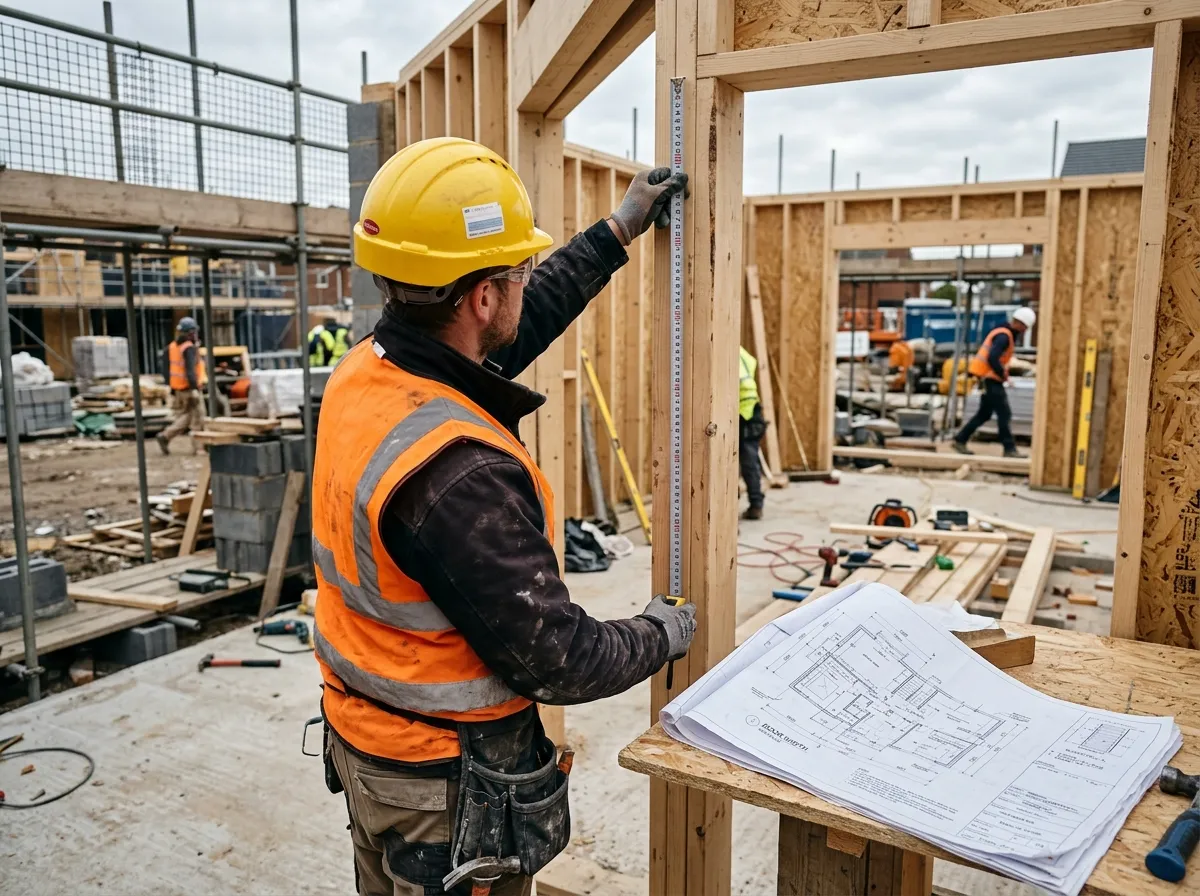
Dimensions get taken once, rounded, or copied from an outdated version of the plans, and nobody double-checks them before ordering. Unit conversion mistakes (feet versus inches, or metric versus imperial) fall into this same category.
An incorrect measurement rarely stays isolated. Order lumber based on a wrong length, and every piece cut from it is wrong too, often not discovered until installation. Measuring once and building wrong the first time costs far more than measuring twice.
Recheck critical measurements against the current drawings before ordering materials, not after. A second person confirming key dimensions catches far more errors than one person checking their own work.
3. Underestimating Material Requirements
Material quantities sometimes get estimated quickly, based on a rough sense of the project rather than an actual measured takeoff. It’s an easy shortcut to take when a project feels straightforward on paper.
The result is usually a mid-project shortage: a second delivery, a delayed schedule, and sometimes a different batch or supplier that doesn’t quite match the first order in color or specification. Underestimating concrete for a slab, for example, can create a visible cold joint when the pour has to stop and restart.
- Explore Our Area Calculator for your help
4. Ignoring Material Waste
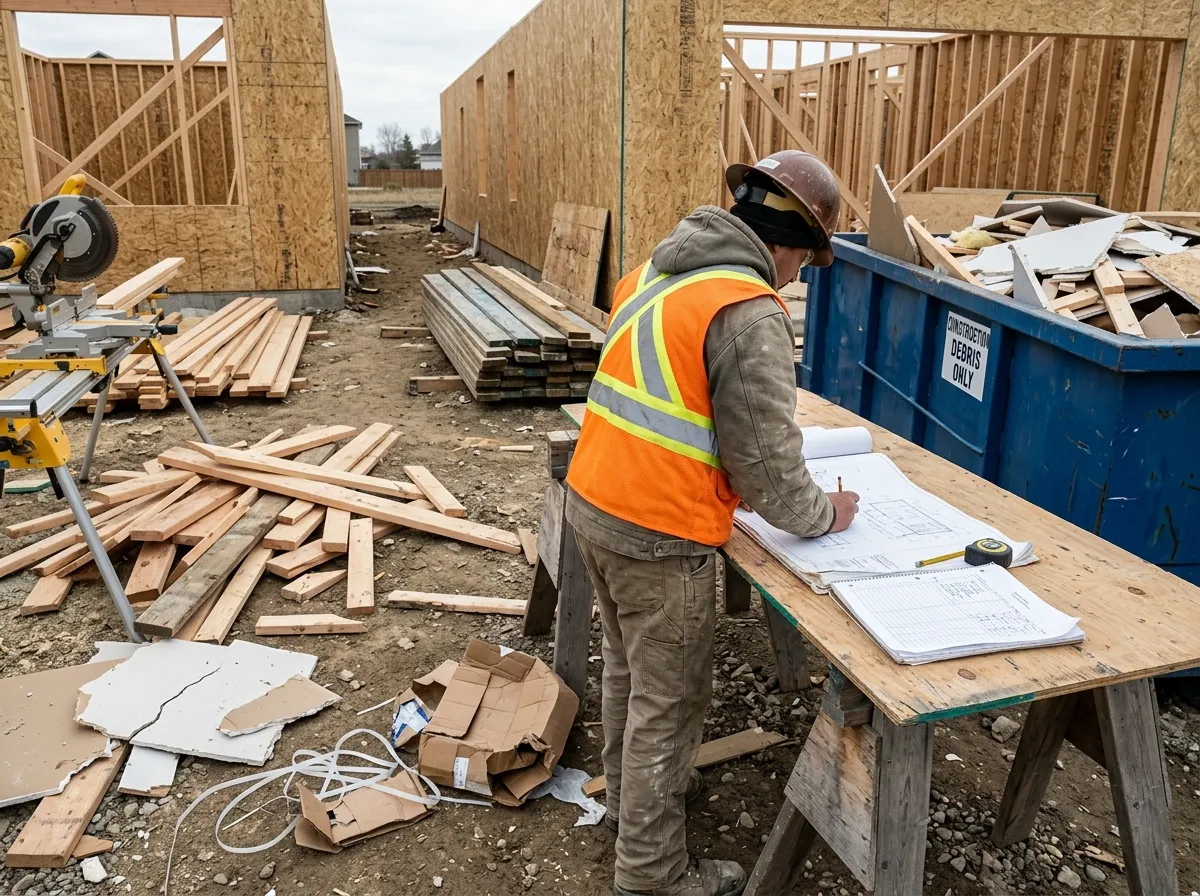
Waste gets left out of the calculation entirely, or it’s assumed to be negligible. In reality, cutting waste, damaged pieces, and materials lost to poor storage add up quickly across a full project.
- Cutting waste from angles, trimming, and pattern matching
- Materials damaged during delivery, handling, or on-site storage
- Extra ordered “just in case” that ends up unused and unreturnable
- Weather exposure that ruins improperly stored materials
Ignoring waste during planning means discovering the shortfall mid-installation, when a second order means both delay and mismatched material batches. Building a reasonable waste allowance into the original quantity takeoff, rather than adding it as an afterthought once materials run short, keeps the order accurate the first time.
5. Ignoring Site Conditions
Ground conditions, drainage patterns, site access, slope, and existing structures don’t always show up clearly on a set of drawings. Plans are drafted based on available information, and that information isn’t always complete.
A site with poor drainage or unexpectedly soft soil can turn a straightforward foundation into a significantly more expensive one once excavation actually begins. Limited access can also mean equipment can’t reach where it’s needed, adding time and cost that never showed up in the original estimate.
A site visit and a basic site assessment before finalizing plans catch most of these issues early, when adjusting the design is still relatively cheap.
6. Choosing Materials Without Checking Project Requirements
Materials sometimes get selected based on appearance, price, or availability, without confirming they actually suit the application, climate, or structural requirements involved. A flooring product rated for light residential use, for example, may not hold up in a commercial space with heavier daily traffic.
Checking a product’s specifications, dimensions, and compatibility with adjoining materials before purchasing prevents this. This doesn’t require choosing a specific brand; it just means matching the product’s actual specifications to the project’s actual requirements.
7. Poor Communication Between Trades
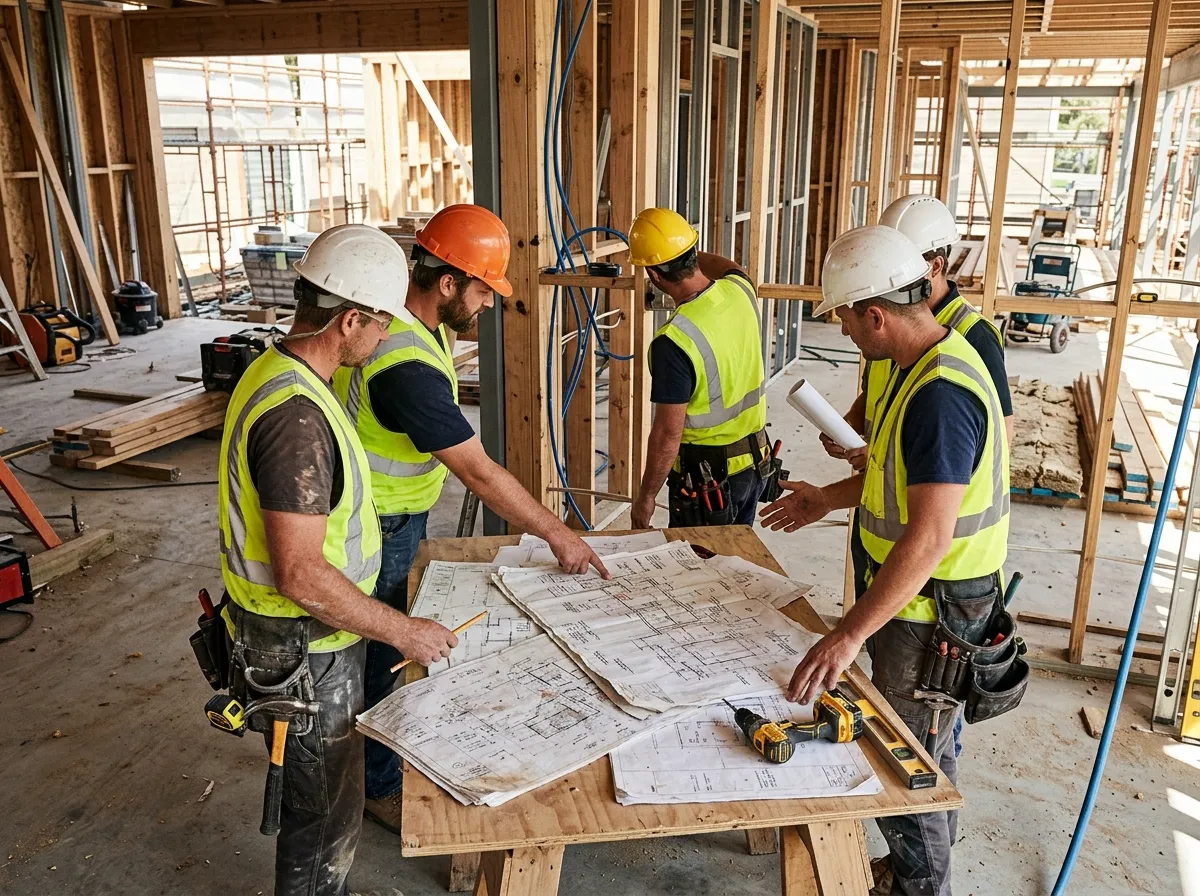
Information doesn’t always reach everyone who needs it. A change discussed with one subcontractor doesn’t always make it to the supplier, the next trade, or the homeowner, and each gap increases the odds of conflicting work.
An electrician who isn’t told about a revised wall location may run wiring that has to be redone once framing catches up. A supplier working from an old materials list may deliver the wrong specification entirely.
A single, current version of the plans and specifications, shared with every trade and updated whenever something changes, closes most of these gaps. A short daily or weekly check-in among trades also catches conflicts before they turn into rework.
8. Making Changes Without Reviewing the Budget
Changes get approved verbally, in the moment, without checking what they actually add to the project cost. A homeowner asks for a slightly larger window, or a contractor swaps a material mid-project, and the number gets settled later, if at all.
Even small changes carry additional material, labor, and sometimes schedule costs that compound if several changes happen without review. This is one of the more common construction budgeting mistakes, and it’s rarely caused by one large change; it’s usually several small ones that were never priced out individually.
Treat every change, no matter how minor it seems, as a mini estimate of its own before approving it. A brief written record of what changed and what it costs prevents disputes and construction cost mistakes later, when the final invoice doesn’t match anyone’s expectations.
9. Skipping Measurements and Quality Checks
Work sometimes gets covered, poured over, or built upon before it’s actually confirmed to be correct. This often happens when a schedule is tight and stopping to check feels like it will slow things down.
Once framing is drywalled or a slab is poured, correcting what’s underneath becomes dramatically more expensive than catching it beforehand. A few checks worth confirming before moving to the next phase:
- Dimensions match the current drawings, not an earlier version
- Level, plumb, and square are confirmed with proper tools, not by eye
- Drainage slope is correct before any surface is finished over it
- Fasteners, connections, and structural elements meet the specified requirements
A short inspection before covering any completed work takes a fraction of the time that correcting a hidden mistake would take later.
10. Not Tracking Costs and Quantities During the Project
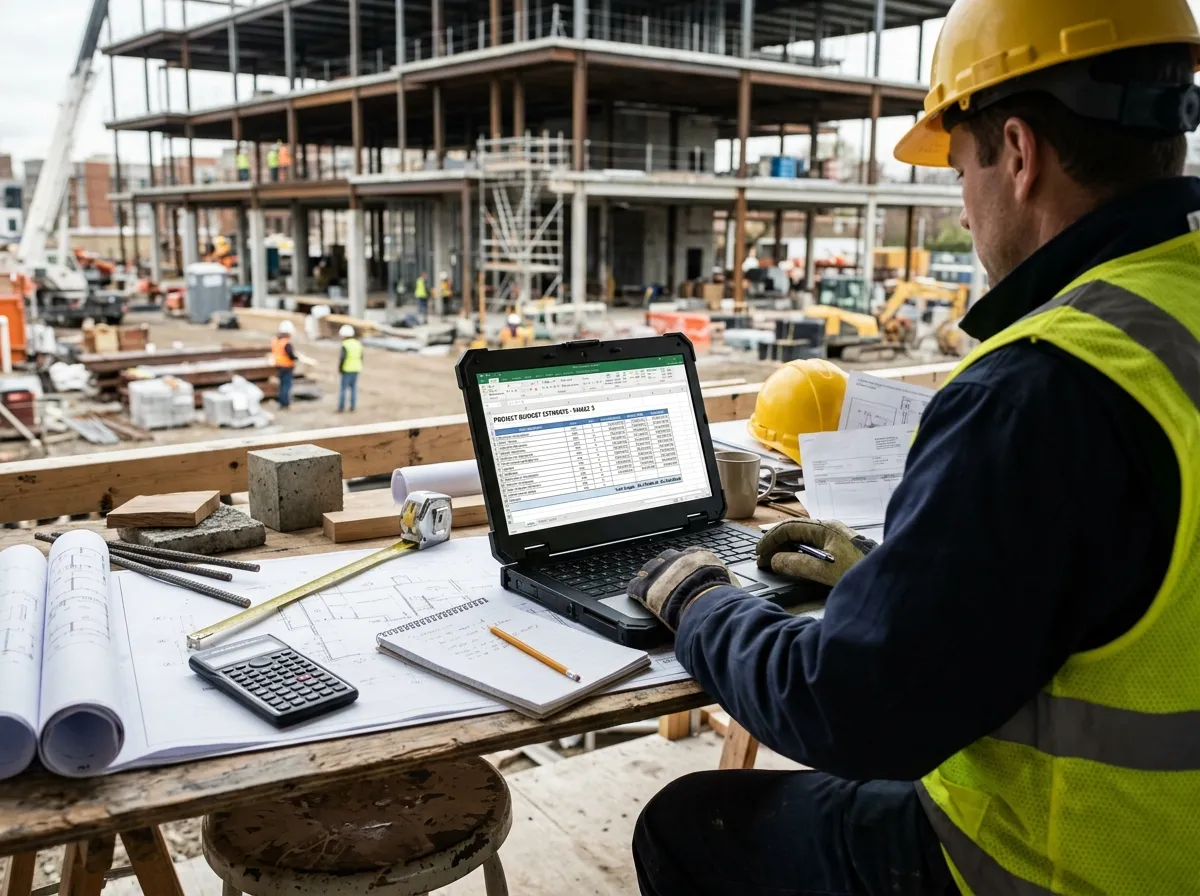
Estimated costs and quantities get set at the start of a project and then rarely compared against what’s actually being spent and used as work progresses. Without that ongoing comparison, a budget can drift well past its original target before anyone notices.
This same tracking gap causes problems beyond the job site. Inconsistent job coding, mixing costs between projects, or entering quantities differently from one entry to the next are common mistakes that break construction job costing in QBO and similar accounting software, making it difficult to see a project’s real profitability until it’s already finished.
Comparing actual costs and quantities against the original estimate at regular points during the project, rather than only at the end, makes overruns visible while there’s still time to respond to them.
The Biggest Mistakes Contractors Make
Ask enough project managers about their worst job-site surprises, and a fairly consistent list of contractor construction mistakes comes up. Some of the biggest construction mistakes show up right here, at the contractor level, not just on a homeowner’s punch list.
The pattern is common enough that people often shorthand it as the 5 mistakes most contractors make, even though the real list usually runs longer. These aren’t usually beginner errors; they tend to show up even on experienced crews when time or attention runs short.
- Incomplete scope: starting a bid or a job before the full scope of work is actually defined
- Poor documentation: verbal agreements and changes that never get written down
- Inaccurate takeoffs: quantities pulled quickly rather than measured carefully from current drawings
- Missed labor: smaller trades or tasks left out of the original labor estimate
- Poor subcontractor coordination: overlapping schedules or unclear handoffs between trades
- Inadequate contingency: a reserve too small for the project’s actual complexity and risk
- Weak cost tracking: no regular comparison between estimated and actual spending
- Failure to review changes: approving scope changes without pricing them first
Most of these common mistakes contractors make share the same root cause: something that should have been written down, measured, or reviewed instead got handled informally, under time pressure. Whatever label you put on them, these construction mistakes contractors make tend to repeat from project to project until someone builds in a system to catch them.
Biggest Mistakes When Building a Home
Homeowners face a different version of many of these same building mistakes, usually because it’s their first time managing a construction project. Some of the most common mistakes when building a house happen before the first wall goes up.
Starting without a realistic budget, one that accounts for materials, labor, permits, and a contingency reserve, is one of the most common home construction mistakes. Changing plans after construction begins compounds this quickly, since a change late in the process almost always costs more than the same change made during design.
Choosing materials without considering how they’ll actually be installed causes its own problems: a beautiful tile that requires a specialized installer, or flooring that isn’t rated for a room with moisture exposure. Poor room and layout planning, along with utilities that weren’t planned for early enough, often surface only once walls are already framed and moving them becomes expensive.
Inadequate storage and access, ignoring long-term maintenance needs, and skipping a careful check of workmanship before final payment round out the list. A small building blunder overlooked at final walkthrough, like an uneven countertop or a door that doesn’t close properly, is far easier to have corrected before the contractor leaves the job than afterward.
Construction Errors That Can Become Expensive
Some mistakes stay minor. Others compound quickly once other work is built on top of them. The table below highlights some of the costliest construction mistakes and what actually prevents each one.
| Mistake | Why It Becomes Expensive | How to Prevent It |
|---|---|---|
| Incorrect foundation measurements | Everything built above depends on this being right | Verify measurements against current drawings before pouring |
| Underordering concrete | Causes cold joints or a delayed, mismatched second pour | Calculate volume carefully, including a reasonable waste allowance |
| Skipping a site drainage assessment | Water damage or foundation issues may not appear for months | Assess drainage and grading before finalizing the design |
| Installing before inspection sign-off | Work may need to be removed and redone to pass inspection | Schedule inspections before covering or continuing over the work |
| Ordering materials from outdated plans | Wrong dimensions or specifications throughout an entire order | Confirm the current drawing revision before every order |
| Approving changes without pricing them | Small changes accumulate into a high, unplanned cost | Price every change before approving it, no matter how minor |
| Poor communication between trades | Conflicting work that has to be partially redone | Share one current set of plans and specs with every trade |
| Not tracking costs during the project | Budget overruns go unnoticed until the project is finished | Compare actual costs and quantities to the estimate regularly |
Common Construction Problems and Their Solutions
Certain common building problems come up often enough that most experienced builders have a standard response ready. The table below covers some of the most frequent ones.
| Problem | Likely Cause | Recommended Action |
|---|---|---|
| Material shortage mid-project | Quantities estimated without a full takeoff | Recalculate remaining quantities and order with a waste allowance |
| Incorrect material quantity ordered | Rough estimate instead of a measured takeoff | Use current drawings and a calculator to confirm quantities |
| Measurement error discovered late | Dimensions not rechecked before ordering or building | Verify critical measurements before each major step |
| Schedule delay | Poor sequencing or late-arriving materials | Confirm lead times and sequence trades before work begins |
| Unexpected site condition | Site not assessed before finalizing the design | Complete a site visit and basic assessment during planning |
| Budget overrun | Changes approved without checking cost impact | Price every change before approving it |
| Damaged materials | Poor storage or handling on site | Store materials properly and inspect deliveries on arrival |
| Rework required | Work covered before it was checked | Inspect and confirm work before moving to the next phase |
A common construction problems and solutions reference like this one is worth keeping handy for the next project, since the same handful of issues tends to reappear across very different jobs.
How to Avoid Construction Mistakes
Most construction mistakes share a common thread: something wasn’t verified before the project moved forward. When people ask how to prevent construction errors specifically, the answer usually comes down to the same handful of checks below. A consistent verification habit prevents far more problems than trying to fix issues after they appear.
- Verify dimensions against current drawings before ordering or building
- Review plans and specifications with every trade involved
- Confirm material quantities with an actual takeoff, not a rough estimate
- Check material specifications against the project’s actual requirements
- Document every change, including cost and schedule impact
- Communicate updates to every trade and supplier affected
- Track actual costs and quantities against the original estimate
- Inspect completed work before covering it or building over it
- Review the project plan and budget before each major phase begins
For homeowners wondering how to avoid building mistakes specifically, the same list applies; it just gets scaled down to the size of a single home rather than a full commercial job.
Construction Mistake Checklist
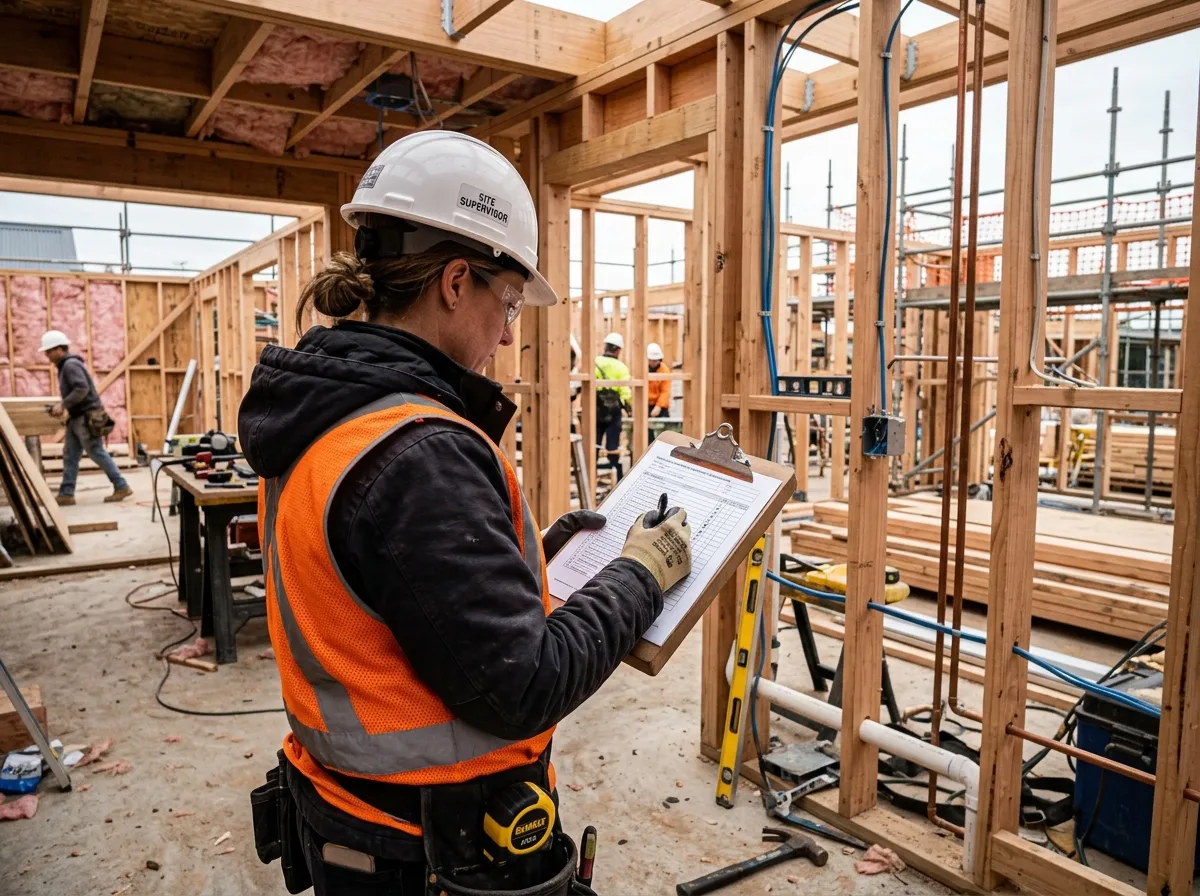
A simple, stage-based checklist is often the easiest way to keep these habits consistent across a project.
Before construction
- Confirm project scope and drawings are current
- Complete a site visit and basic site assessment
- Set a realistic budget with a contingency reserve
During planning
- Confirm sequence of work and trade responsibilities
- Review material specifications against project requirements
- Share current plans with every trade and supplier involved
Before ordering materials
- Recheck measurements against current drawings
- Confirm quantities with a full takeoff, including waste allowance
- Verify pricing and lead times with suppliers
During construction
- Track actual costs and quantities against the estimate
- Document and price any changes before approving them
- Maintain clear communication between all trades
Before completing each major phase
- Inspect and confirm work before it’s covered or built over
- Verify dimensions, level, and structural connections
- Resolve any discrepancies before moving forward
Final inspection
- Walk through and confirm workmanship throughout
- Compare final costs and quantities against the original estimate
- Document any outstanding items before final sign-off
How Construction Calculators Can Help Prevent Mistakes
A large share of the mistakes covered in this guide come down to repetitive, manual calculations: area, volume, material quantities, and unit conversions performed by hand under time pressure. These are exactly the kinds of calculations where a small arithmetic slip is easy to make and easy to miss.
Construction Maths provides a set of free online construction calculators built around this problem, covering area and volume, concrete, roofing, flooring, and general material quantities. Using a Construction Maths Calculator for these repetitive calculations reduces the chance of a manual error, since the same formula gets applied consistently every time.
Frequently Asked Questions About Construction Mistakes
What are the most common construction mistakes?
The most common issues include unclear project scope, inaccurate measurements, underestimated material quantities, poor communication between trades, and changes made without reviewing their cost impact.
What is the biggest mistake to avoid when building a house?
Starting without a realistic, complete budget is one of the most damaging mistakes, since it makes every later decision, from material selection to change orders, harder to manage without overspending.
How can construction errors be prevented?
Most construction errors are prevented through verification: checking measurements before ordering, confirming quantities with a real takeoff, reviewing changes before approving them, and inspecting work before it’s covered.
What mistakes do contractors commonly make?
Common contractor mistakes include incomplete scope definition, inaccurate takeoffs, missed labor costs, weak cost tracking, and approving changes without pricing them first.
How can I avoid costly construction mistakes?
Build in a verification step at each major stage: confirm the plan before starting, recheck measurements before ordering, and compare actual costs and quantities against the estimate as the project progresses.
What should I check before construction begins?
Confirm the project scope, current drawings, site conditions, material specifications, and budget (including a contingency reserve) before any work starts.
How do incorrect measurements affect a construction project?
An incorrect measurement typically doesn’t stay isolated. It carries through into material orders, installation, and sometimes other trades’ work, often going unnoticed until installation reveals the mismatch.
How can material calculation mistakes be avoided?
Use a full quantity takeoff based on current drawings rather than a rough estimate, include a reasonable waste allowance, and double-check totals with a calculator before placing an order.