
Free construction calculators for quick, accurate estimates, measurements, and project planning

How Much Does It Cost to Renovate a House? (USA)
Renovating a house typically costs anywhere from about $15 to $200 or more per square foot, depending on how extensive the work is. A light cosmetic refresh sits at the low end of that range, while a full gut renovation involving structural, electrical, and plumbing work sits at the high end.
There’s no single number that applies to every home, since renovation costs depend on house size, existing condition, scope of work, location, material choices, and labor rates.
People ask this question a few different ways:
- How much does it cost to renovate a home
- How much will it cost to renovate a house
- How much does renovation cost
The answer follows the same logic no matter how it’s phrased.
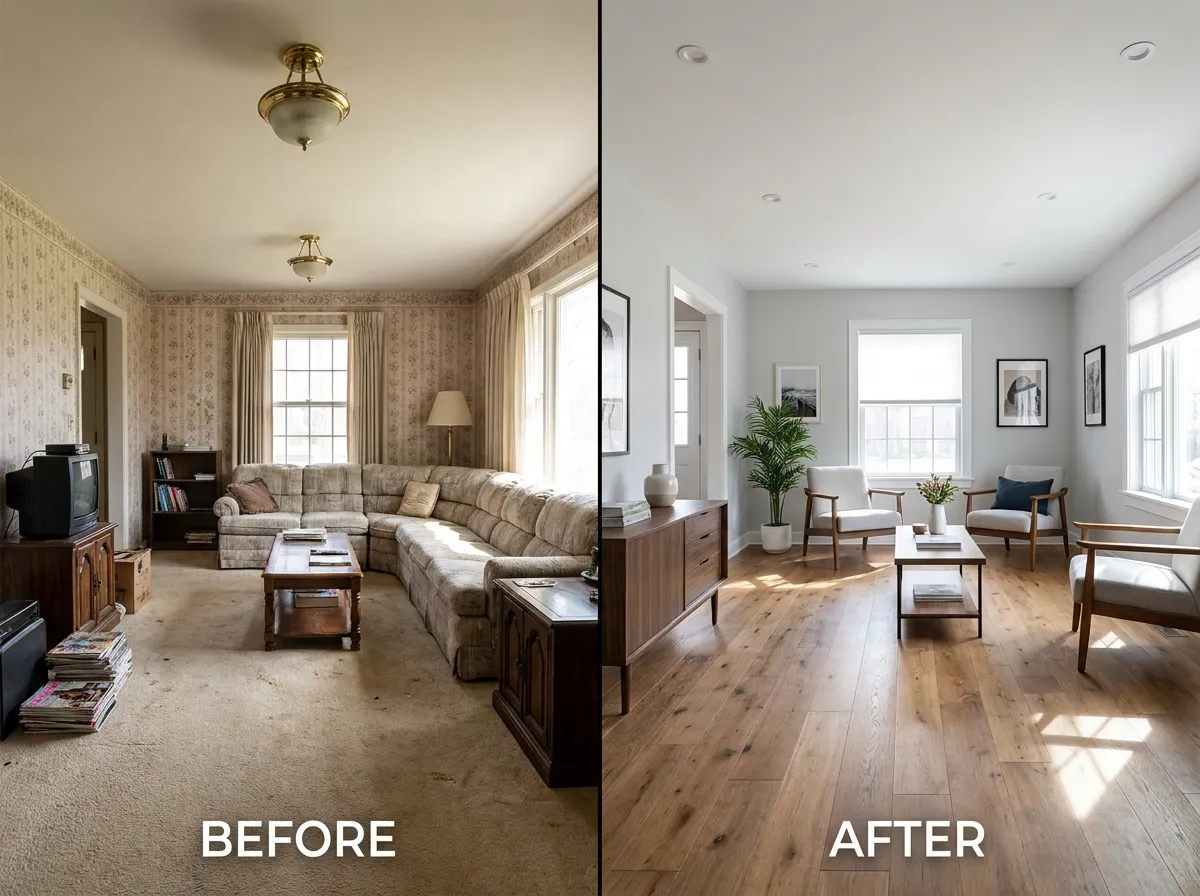
The honest answer is that it depends on what “renovate” means for your specific project. A cosmetic update, like new paint, flooring, and fixtures, costs far less than a renovation that involves moving walls, rewiring, or replacing plumbing.
As a general reference point, renovation projects tend to fall into three broad tiers:
- Minor/cosmetic renovation: paint, flooring, fixtures, and surface-level updates, often in the range of $15 to $50 per square foot
- Moderate renovation: kitchen or bathroom remodels, some layout changes, updated systems, often in the range of $50 to $100 per square foot
- Major/full renovation: structural changes, full system replacement, or a whole-house gut renovation, often $100 to $200+ per square foot
These figures are general reference ranges, not fixed prices. Local labor and material costs vary significantly across the United States, and the only way to know an accurate number for your project is to get quotes based on your specific home and location.
Average House Renovation Costs in the USA
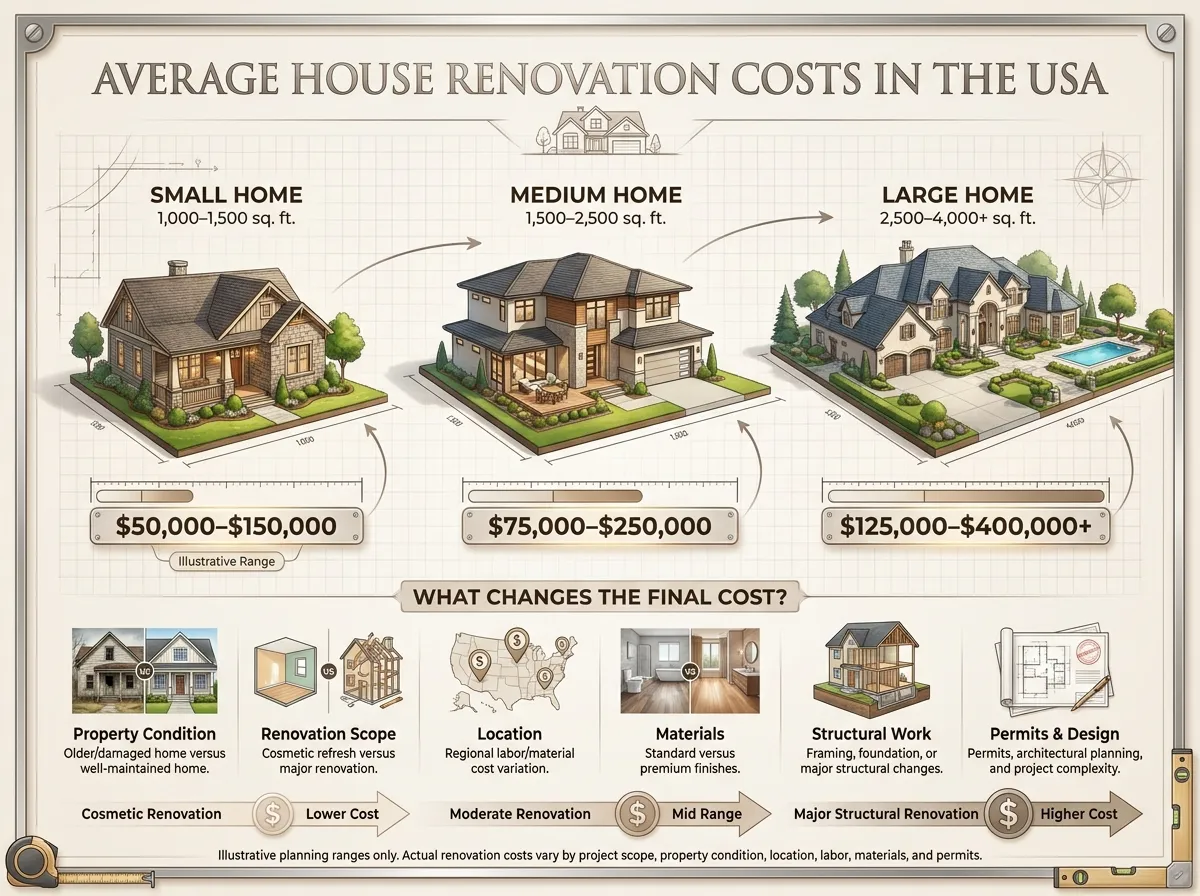
Average renovation costs are a useful starting point, but they can be misleading if treated as a firm target. Home renovation costs, or the cost of home renovation more generally, are usually reported in national data as broad averages that combine many different project types and house sizes into one number.
The same square footage can produce very different totals depending on the property’s condition and what the renovation actually includes. The table below shows how a moderate renovation might scale across different home sizes, purely as an illustrative reference.
| House Size | Approximate Square Footage | Example Total Cost Range (Moderate Renovation) |
|---|---|---|
| Small home | 1,000-1,500 sq. ft. | $50,000-$150,000 |
| Medium home | 1,500-2,500 sq. ft. | $75,000-$250,000 |
| Large home | 2,500-4,000+ sq. ft. | $125,000-$400,000+ |
These figures are illustrative only and assume a moderate renovation scope. A purely cosmetic project would fall well below this range, while a major structural renovation could exceed it significantly.
House size is the most obvious driver, since more square footage generally means more materials and labor hours. Property condition matters just as much: a well-maintained home needing only cosmetic work costs far less to renovate than one with hidden damage, outdated wiring, or aging plumbing that needs to be addressed first.
Renovation scope, location, material selection, labor availability, if structural work is involved, permit requirements, and design complexity all shift the average up or down from there. Typical house renovation costs reported in national data are a reasonable starting reference, but they are built from a wide mix of project types and regions, so treat them as a general guide rather than a prediction for your specific house.
Cost to renovate a home and average cost of home renovation are really the same question asked two different ways, and both deserve the same answer: it depends on the specifics of your project.
Planning to repaint rooms as part of the project?
- Use our Paint Calculator to estimate the amount of paint required based on wall area and the number of coats.
Renovating a bathroom or shower?
- Our Shower Tile Calculator can help estimate tile and grout requirements before you order materials.
8 Factors Affect the Cost of Renovating a House (USA)
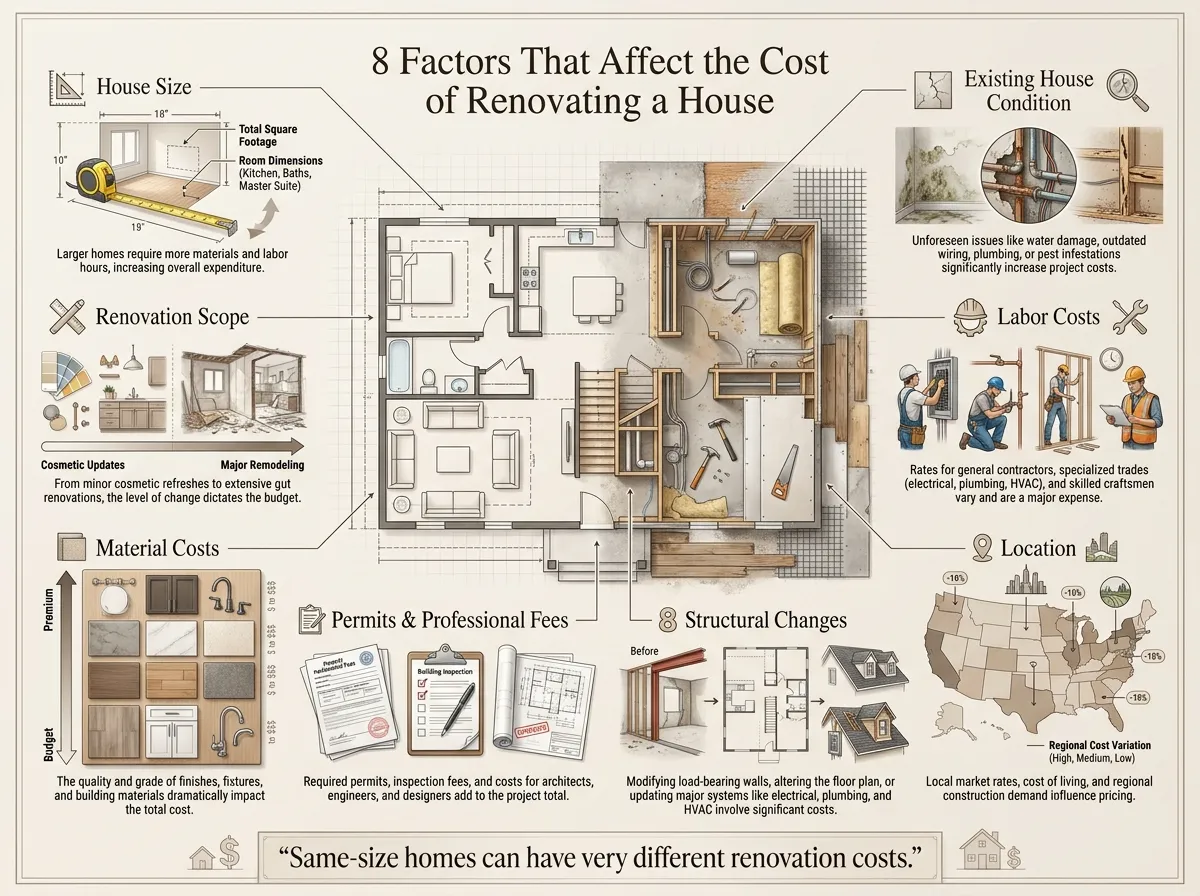
A handful of variables account for most of the difference between a modest renovation bill and an expensive one. Understanding them helps explain why two similarly sized homes can end up with very different quotes.
1. House Size
Larger homes generally require more materials and more labor hours to renovate, simply because there’s more square footage to cover. A 3,000 sq. ft. home renovated to the same standard as a 1,200 sq. ft. home will almost always cost more in total, even at a similar per-square-foot rate.
2. Condition of the Existing House
Outdated, damaged, or poorly maintained properties often need work that isn’t obvious from a walkthrough.
Here are a few common issues that surface once work begins:
- Water damage or hidden mold behind walls or under flooring
- Pest damage to framing or subfloor
- Outdated or unsafe wiring
- Aging or failing plumbing
3. Scope of Renovation
Cosmetic improvements, like painting, new flooring, and updated fixtures, cost far less than work that changes a room’s layout or function. The wider the scope, the more categories of cost (design, demolition, materials, labor, permits) come into play at once.
4. Labor Costs
Contractor and skilled-trade labor typically makes up a significant share of any renovation budget, and rates vary by trade, region, and project complexity. Specialized trades like electricians and plumbers usually charge more than general labor, and their involvement adds up quickly on projects with structural or system changes.
5. Material Costs
Material quality, quantity, availability, and selection all affect the total directly. Two kitchens of similar size can end up with very different budgets purely based on whether the cabinets, countertops, and flooring are entry-level or premium products, even before labor is factored in.
Material prices also shift over time with market conditions, so a quote gathered months before work starts may not reflect current pricing by the time materials are actually ordered.
Some of the few factors that shift material costs up or down:
- Budget-grade versus premium finishes
- Custom or special-order items versus stock products
- Current market availability and lead times
- Quantity needed, including a reasonable waste allowance
6. Location
Regional labor and material costs differ substantially across the country, and even within the same state, urban and rural pricing can vary. A renovation that costs a certain amount in one metro area may cost noticeably more or less in another.
7. Permits and Professional Fees
Some projects require permits, inspections, architectural drawings, engineering review, or other professional services before work can begin. These costs are easy to underestimate if a homeowner is pricing only materials and labor:
- Building permits and inspection fees
- Architectural or design drawings
- Structural engineering review
- Specialty inspections (electrical, plumbing, HVAC)
8. Structural Changes
Removing walls, changing a floor plan, replacing a roof, or upgrading electrical and plumbing systems all add meaningfully to project cost. Structural work often requires additional permits and professional oversight, which compounds the cost beyond the physical materials and labor involved.
Home Renovation Cost by Project Type
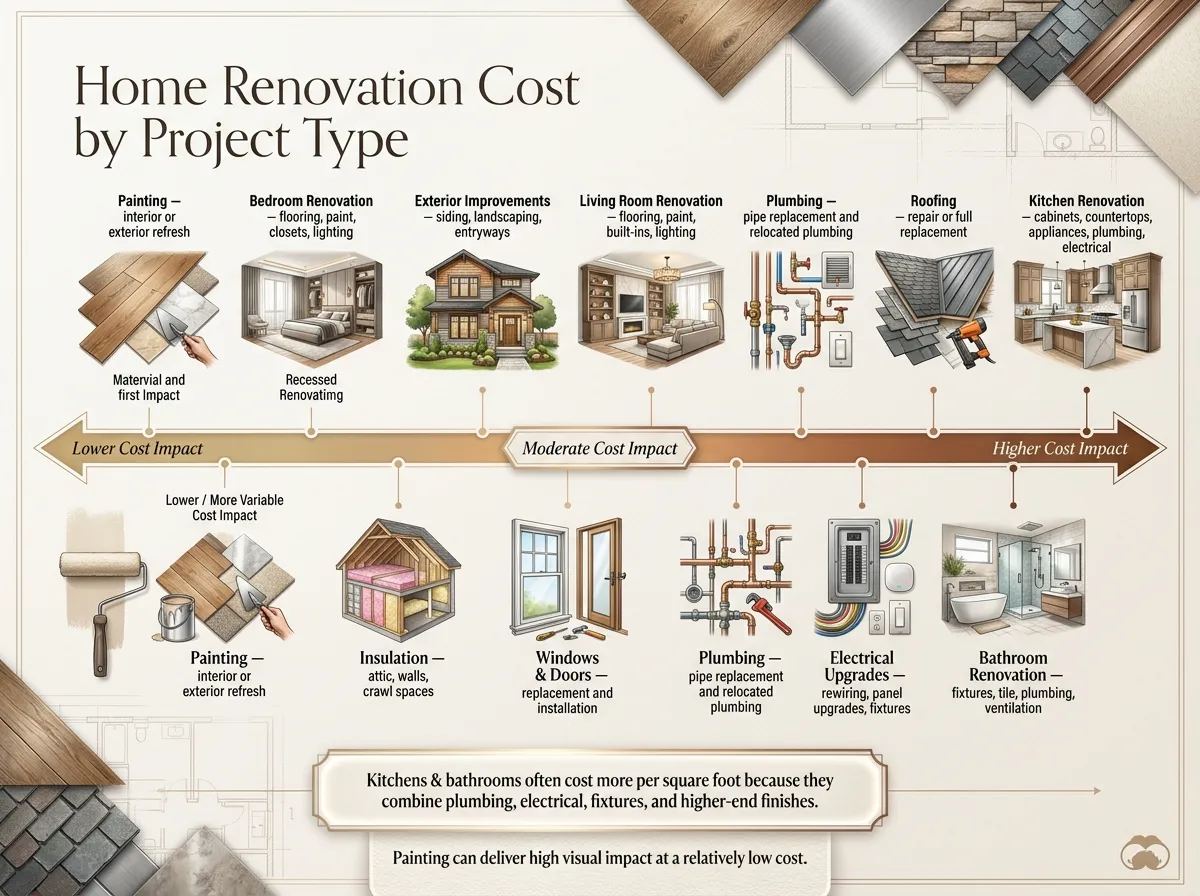
Different rooms and systems contribute differently to a total renovation budget. The table below outlines common project types and how they typically factor into overall cost.
| Project Type | What It Typically Involves | Relative Cost Impact |
|---|---|---|
| Kitchen renovation | Cabinets, countertops, appliances, plumbing, electrical | Often one of the highest-cost individual rooms |
| Bathroom renovation | Fixtures, tile, plumbing, ventilation | High cost per square foot due to plumbing and fixtures |
| Bedroom renovation | Flooring, paint, closets, lighting | Generally lower cost per square foot |
| Living room renovation | Flooring, paint, built-ins, lighting | Moderate, depends on finish level |
| Flooring | Material and installation across affected rooms | Varies widely by material choice |
| Painting | Interior or exterior surface refresh | Relatively low cost, high visual impact |
| Roofing | Repair or full replacement | Can be a major cost if replacement is needed |
| Electrical upgrades | Rewiring, panel upgrades, new fixtures | Cost rises with the scope of rewiring |
| Plumbing | Pipe replacement, fixture updates | Cost rises significantly with relocated plumbing |
| Windows and doors | Replacement units and installation | Moderate, scales with number of openings |
| Insulation | Attic, wall, or crawl space insulation | Moderate, often pays back through energy savings |
| Exterior improvements | Siding, landscaping, entryways | Varies widely by material and scale |
Kitchens and bathrooms tend to be the most expensive individual projects because they combine plumbing, electrical, and higher-end finishes in a relatively small footprint. Cosmetic categories like painting and flooring generally offer more visible improvement per dollar spent.
How Much Does a Full House Renovation Cost?
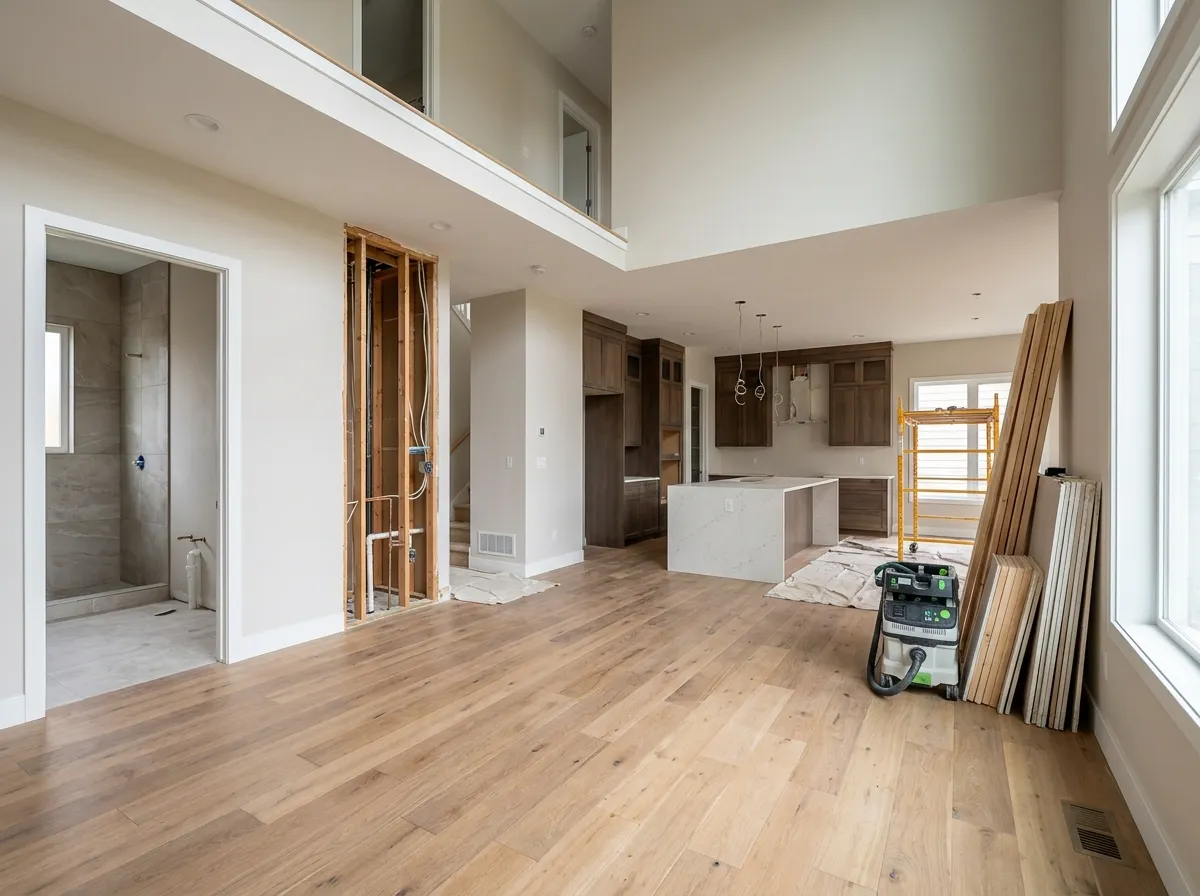
A full house renovation can mean very different things depending on the starting condition of the property. People phrase this a few ways too: how much does a full home renovation cost, how much does a complete house renovation cost, or simply what it costs to completely renovate a house or fully renovate a house. Regardless of the wording, the answer scales with how much of the home is actually being rebuilt.
A cosmetic full-house renovation, updating paint, flooring, and fixtures throughout without touching layout or systems, sits toward the lower end of the overall cost spectrum.
A moderate whole-house renovation usually includes kitchen and bathroom updates plus some cosmetic work throughout the rest of the home. This tier often falls in the middle of the ranges discussed earlier, since it combines higher-cost rooms with lower-cost cosmetic work elsewhere.
A major or full gut renovation, stripping a home down to its studs and rebuilding systems, layout, and finishes, sits at the top of the range. Structural renovations that involve foundation work, load-bearing wall removal, or a full systems overhaul can push costs well beyond a standard remodel, since they combine every cost category discussed in this guide at once.
The condition of the existing structure matters as much as the size of the home when estimating a complete renovation. Two houses of the same square footage can have very different full-renovation price tags if one needs extensive structural repair and the other only needs cosmetic and system updates.
How Much Does It Cost to Remodel a House?
People often use “remodel” and “renovate” interchangeably, and in casual conversation, that’s usually fine. Technically, remodeling typically refers to changing the layout, function, or structure of a space (turning two small rooms into one open area, for example), while renovation can also mean restoring or updating an existing space without changing its function.
In practice, the cost difference between the two terms is less important than the actual scope of work involved. A remodel that changes a room’s layout tends to cost more than a renovation that simply updates finishes, regardless of which word is used to describe it.
You’ll see this priced under a few different labels: cost to remodel a home, remodel house cost, remodeling house cost, or simply home remodeling costs, and from how much to remodel a home to how much does it cost to remodel house, the pricing logic stays identical to the renovation costs covered throughout this guide.
The same cost factors covered throughout this guide- size, condition, scope, materials, labor, and location, apply just as directly to remodeling projects as they do to renovations. If you’re comparing quotes and one contractor calls it a “remodel” and another calls it a “renovation” for the same scope of work, focus on what’s actually included rather than the terminology used.
How to Estimate Your House Renovation Cost
Building a workable home renovation estimate, or home renovation price if you prefer that phrasing, starts with defining the project clearly enough that materials and labor can actually be priced.
- Measure the areas being renovated, including floor area and any walls or surfaces involved.
- List every task the renovation will require, from demolition through finishing.
- Estimate material quantities for each task based on those measurements.
- Estimate labor requirements, either from your own research or contractor input.
- Add permits and professional fees where the project requires them.
- Add a contingency allowance to cover unexpected costs.
- Review the total against your available budget before committing to the scope.
Estimates become far more useful once the scope and quantities are clearly defined rather than left as a rough guess. A vague plan produces a vague number, while a detailed task list produces a number you can actually rely on.
How to Create a House Renovation Budget
Once you have a rough cost estimate, organizing it into a formal budget makes it easier to track spending as the project moves forward.
- Materials: everything physically installed in the renovated space
- Labor: wages for every trade involved in the work
- Demolition: removing existing finishes, fixtures, or structures
- Disposal: hauling away debris and old materials
- Permits: local permit and inspection fees
- Fixtures: cabinets, countertops, plumbing fixtures, lighting, and similar items
- Finishes: paint, flooring, trim, and other surface materials
- Equipment: any rented tools or machinery needed for the work
- Professional fees: architects, engineers, or designers if involved
- Contingency: a reserve for unexpected costs
A contingency is worth including on almost every renovation, since older homes in particular tend to reveal issues once walls or floors are opened up. Sizing the contingency to match the property’s age and condition, rather than using a flat percentage on every project, keeps the budget realistic.
How to Reduce House Renovation Costs
Controlling renovation costs is mostly about discipline in planning rather than cutting corners on the work itself.
Define the full scope before starting, since adding tasks mid-project almost always costs more than including them in the original plan. Compare material options carefully, since similar-looking products can vary significantly in price without a meaningful difference in quality or durability.
Avoid unnecessary layout changes if the existing layout already works reasonably well, since moving walls, plumbing, or electrical adds cost well beyond materials alone. Reuse existing components that are still in good condition, and prioritize the improvements that will have the biggest impact on the space rather than trying to upgrade everything at once.
A few more habits that help keep costs under control:
- Get detailed, itemized quotes rather than a single lump-sum number
- Avoid changing plans midway through the project once work has started
- Account for material waste when ordering, rather than ordering the exact minimum
- Plan purchases carefully to avoid rush orders or last-minute substitutions
- Keep a contingency fund available rather than treating the base estimate as final
Structural, electrical, and plumbing work should always go to qualified, licensed professionals rather than being treated as a place to cut costs, since mistakes in these areas create safety risks and often cost more to fix later than they would have cost to do the first time correctly.
Renovation Cost Example in the USA Market
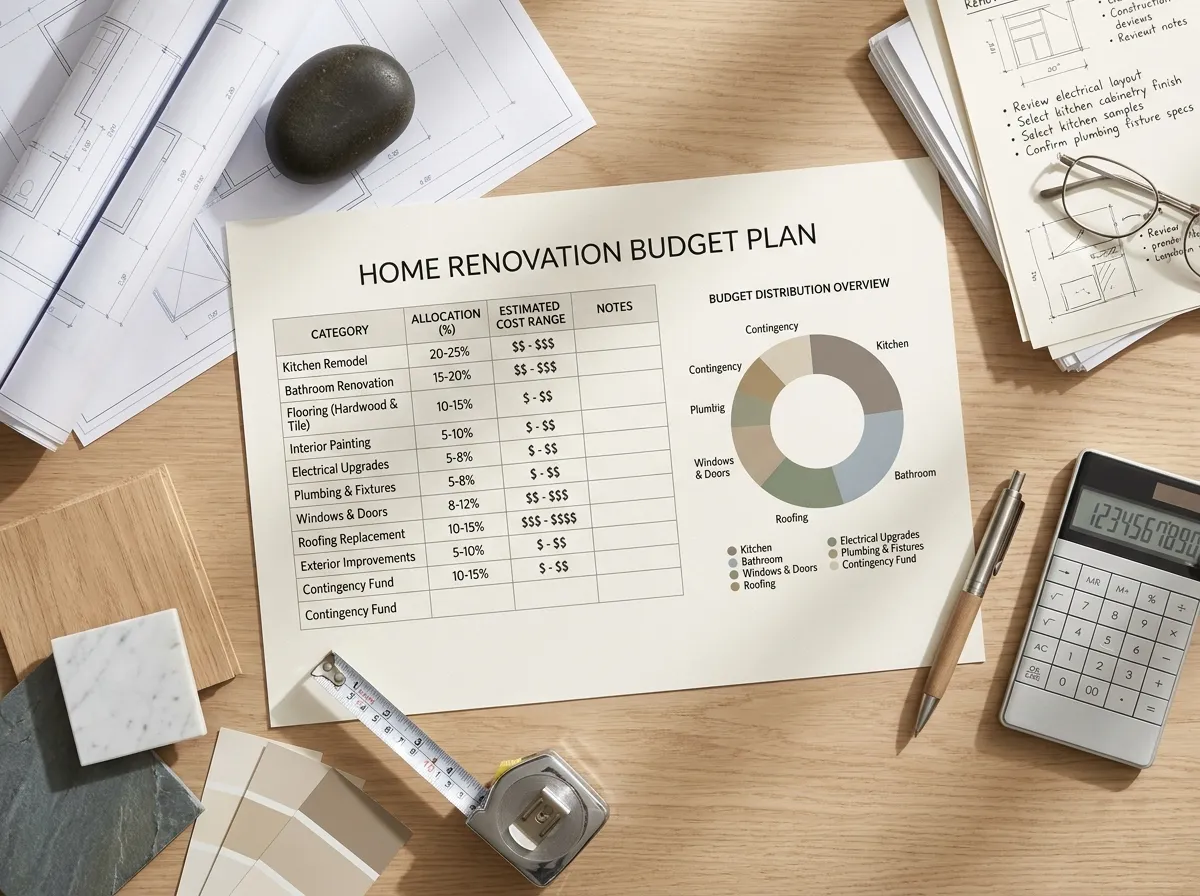
The following is a hypothetical example only, meant to show how a renovation budget might be structured. It is not a universal average and should not be treated as a real quote for any specific property.
Example: A homeowner plans a moderate renovation of a kitchen and bathroom in a mid-sized home, including new cabinets, countertops, flooring, and updated fixtures, without changing the existing layout.
| Category | Example Share of Budget |
|---|---|
| Materials | 45% |
| Labor | 35% |
| Permits and professional fees | 5% |
| Contingency | 15% |
These percentages are illustrative only and will shift depending on the specific project. A renovation involving structural changes would typically show a larger labor and permit share, while a purely cosmetic project would lean more heavily toward materials.
Use Construction Maths Tools to Estimate Renovation Quantities
Once you’ve defined the scope of a renovation, a few free tools can help turn those plans into actual quantities before you start pricing materials.
Once you know the area you’re renovating, our Square Footage Calculator can help you calculate the total floor area, which feeds directly into flooring, paint, and material estimates throughout this guide.
These tools, available on Construction Maths, provide planning estimates rather than professional contractor quotes. They’re useful for getting a realistic sense of quantities early on, but actual costs should still be confirmed with current supplier pricing and contractor quotes for your specific project.